Gastro Sciences
Colon cancer Keyhole surgery
May 2026

Author: Dr. Deepak George T, Senior Consultant - Surgical Gastroenterology & Liver Transplant Surgery
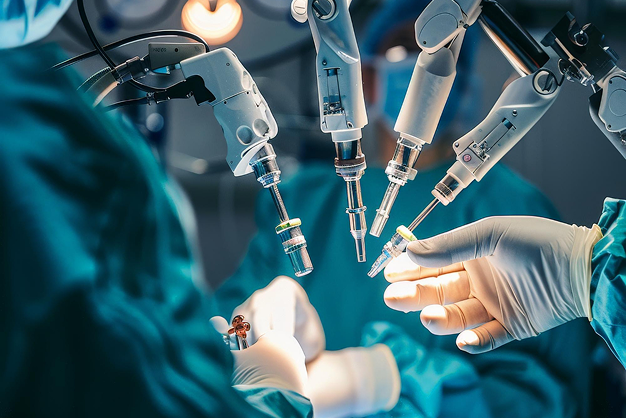
Robotic surgery is one of the most advanced surgical techniques at the forefront of Keyhole Surgery. Da Vinci is the first and one of the most widely recognized robotic surgical systems in the world. The Da Vinci Xi robotic surgery system is one of the most advanced robotic platforms available in India. It is a state-of-the-art robotic surgical system designed to overcome several limitations of earlier robotic surgery models.
Robotic surgery can never replace a doctor. Instead, it assists the surgeon in performing Keyhole Surgery with greater precision and makes it easier to operate safely in deep and difficult-to-reach areas of the abdomen. It is particularly beneficial for complex abdominal procedures. Complex surgeries involving the oesophagus, stomach, liver, pancreas, small intestine and large intestine can be performed with the assistance of robotic general surgery.
One of the most important advantages of robotic surgery is its 3D vision. During surgery, it provides an extraordinary view that feels almost like sitting inside the abdomen and operating directly. Organs and blood vessels can be viewed in magnified detail, up to 10 times larger. Unlike conventional laparoscopic surgery, robotic surgery does not require a separate camera assistant. The operating surgeon controls the camera directly, providing a highly stable and controlled surgical view.
Another advantage is that the problem of camera fogging in laparoscopic surgery, which can be particularly troublesome during certain procedures, is much less common with robotic surgery. This can be especially beneficial during surgeries involving the oesophagus, rectum and pancreas.
The second major advantage is the precision and flexibility of the surgical instruments used in robotic surgery. These instruments can bend and rotate more effectively than conventional laparoscopic instruments and offer a greater range of movement. This enables the surgeon to operate around major blood vessels and surrounding lymph nodes with greater precision. This can be particularly useful in Robotic Cancer Surgery, especially when performing complex abdominal cancer procedures.
The third important advantage is the ergonomic comfort robotic surgery provides to the surgeon. During open surgery and laparoscopic surgery, particularly lengthy abdominal cancer procedures, surgeons may experience considerable physical discomfort from standing for several hours. Robotic surgery allows the surgeon to operate while seated and provides greater ergonomic comfort during long procedures. This can help the surgeon maintain precision and concentration throughout complex operations.
The robotic arms have several other important features. Unlike a surgeon's hands, the robotic instruments do not reproduce small hand tremors. If the surgeon makes a three-centimetre movement with their hand, the robotic system can translate it into a much smaller movement inside the patient's body. This helps minimize unnecessary movements and allows precise dissection near major blood vessels, potentially helping to reduce unnecessary bleeding.
Although open surgery provides a high degree of freedom of movement, the same level of freedom is not always available in laparoscopic surgery. This becomes particularly evident when suturing organs inside the abdomen, known as intracorporeal suturing. With robotic instruments, the surgeon can perform suturing through small keyhole incisions with greater ease and precision. This is particularly helpful during procedures involving the bile duct, oesophagus and pancreas.
In robotic hernia surgery, instruments such as the tacker commonly used in laparoscopic procedures may not always be required, depending on the surgical technique used. This may contribute to comparatively less postoperative discomfort for some patients. Robotic surgery can also support earlier recovery and discharge in appropriately selected cases.
However, robotic surgery is not practical or necessary for every surgical procedure. The robotic instruments are expensive, and performing these procedures requires specialized training and expertise. Therefore, the decision to use robotic surgery should be made after discussing the case with an experienced robotic surgeon and determining whether the patient is an appropriate candidate.
When robotic assistance is used for carefully selected cases, this advanced technology can help surgeons perform complex procedures with greater precision and may support faster recovery after surgery. Robotic surgery in India, particularly with advanced platforms such as the Da Vinci Xi robotic surgery system, is expanding the possibilities of minimally invasive surgery across several surgical specialties.